Adult T-cell leukemia/lymphoma (ATL) is a rare and aggressive cancer affecting T-lymphocytes, a type of white blood cell. It is caused by infection with Human T-Cell Lymphotropic Virus Type I (HTLV-I), a retrovirus that can remain dormant for years. The HTLV-I/II Qualitative blood test is the most important test for ATL diagnosis because it detects viral DNA that is present in virtually all ATL cases.
90-day money-back guaranteeLab order in minutesSave a trip to the doctorLow prices since 2005Labs within 2 miles
What causes Adult T-cell leukemia/lymphoma?
Adult T-cell leukemia/lymphoma is caused by infection with Human T-Cell Lymphotropic Virus Type I (HTLV-I), a retrovirus transmitted through blood, sexual contact, or from mother to child during breastfeeding. The virus infects T-lymphocytes and can remain dormant in the body for decades before triggering cancer development. While most people infected with HTLV-I never develop ATL, the virus is found in virtually all ATL cases, making it the definitive cause of this rare and aggressive cancer.
What is the best blood test for Adult T-cell leukemia?
The Human T-Cell Lymphotropic Virus I, II (HTLV-I/HTLV-II) Qualitative test is the most important blood test for Adult T-cell leukemia because it detects viral DNA that confirms HTLV-I infection, which is present in nearly all ATL cases. This test uses advanced molecular techniques to identify the presence of HTLV-I and HTLV-II genetic material in your blood. A positive HTLV-I result in patients with suspicious symptoms or blood abnormalities strongly supports the potential diagnosis of ATL and indicates the need for comprehensive evaluation by a hematologist or oncologist, including additional blood work, imaging studies, and tissue examination.
When should I get tested for Adult T-cell leukemia?
You should get tested if you were born in or have lived in high-risk geographic areas like Japan, the Caribbean, Central Africa, or parts of South America where HTLV-I is common. Testing is also important if you have unexplained symptoms such as persistent skin rashes, enlarged lymph nodes, unexplained weight loss, frequent infections, bone pain, or abnormal blood cell counts. Additionally, anyone with a family history of HTLV-I infection, previous blood transfusions before screening programs began, or injection drug use should consider testing, especially if experiencing unexplained health problems.
What are the symptoms of Adult T-cell leukemia?
Adult T-cell leukemia symptoms include skin lesions or rashes that may appear as red, scaly patches or nodules, enlarged lymph nodes in the neck, armpits, or groin, and unexplained weight loss or fatigue. You might also experience frequent infections due to weakened immunity, bone pain or fractures from bone involvement, elevated calcium levels causing excessive thirst and confusion, and enlarged liver or spleen. Some people develop digestive issues, persistent cough, or neurological symptoms. The disease can progress rapidly in acute forms or develop slowly over years in chronic or smoldering types.
Who is at risk for Adult T-cell leukemia?
People at highest risk for ATL are those infected with HTLV-I, particularly individuals from endemic regions including southwestern Japan, the Caribbean basin, parts of Central and South America, Central Africa, and certain areas of the Middle East. Other risk factors include being breastfed by an HTLV-I infected mother, receiving contaminated blood transfusions before screening programs, sharing needles for drug use, and having unprotected sex with infected partners. Only about 2-5% of HTLV-I infected individuals develop ATL, typically after 40-60 years of age, with men slightly more affected than women.
What happens if Adult T-cell leukemia is left untreated?
Untreated Adult T-cell leukemia can rapidly progress and become life-threatening, particularly in acute and lymphoma forms which have aggressive courses. The cancer spreads throughout the lymphatic system and can invade multiple organs including the skin, lungs, liver, digestive tract, and bones. Complications include severe immunosuppression leading to life-threatening infections, dangerously high calcium levels causing kidney failure and altered mental status, bone destruction causing fractures and severe pain, and organ failure. The acute form has a particularly poor prognosis with median survival of only 6-10 months without treatment, making early diagnosis and aggressive intervention critical.
Can Adult T-cell leukemia be diagnosed with a blood test?
Blood tests are essential for diagnosing Adult T-cell leukemia but must be combined with other evaluations. The HTLV-I/II Qualitative test confirms viral infection, while complete blood counts reveal abnormal T-lymphocytes with characteristic flower-shaped nuclei that are hallmark features of ATL. Blood work also shows elevated white blood cell counts, decreased red blood cells and platelets, high calcium levels, and elevated lactate dehydrogenase. However, definitive diagnosis requires additional testing including flow cytometry to identify specific cell markers, bone marrow biopsy, lymph node biopsy for tissue examination, and imaging studies to determine disease extent.
How is Adult T-cell leukemia treated?
Adult T-cell leukemia treatment depends on the subtype and typically involves multi-agent chemotherapy regimens for aggressive forms, though ATL is notoriously resistant to standard treatments. Treatment options include combination chemotherapy with drugs like CHOP or EPOCH, antiviral therapy combining zidovudine and interferon-alpha (particularly effective for chronic and smoldering types), monoclonal antibody therapy with mogamulizumab targeting CCR4 protein, and allogeneic stem cell transplantation for eligible patients offering the best chance for long-term remission. Supportive care addresses complications like high calcium levels, infections, and skin lesions, while clinical trials may offer access to newer targeted therapies and immunotherapy approaches.
How can I prevent Adult T-cell leukemia?
Preventing Adult T-cell leukemia centers on avoiding HTLV-I infection since the virus is the direct cause. Key prevention strategies include HTLV-I infected mothers avoiding breastfeeding and using formula instead to prevent mother-to-child transmission, practicing safe sex by using condoms consistently and getting tested before unprotected intercourse with new partners, never sharing needles or injection drug equipment, and ensuring blood products are screened for HTLV-I. In endemic areas, public health screening programs help identify carriers early. If you are HTLV-I positive but have not developed ATL, regular monitoring by a hematologist can detect early changes, though no proven intervention prevents progression from infection to cancer.
What can I do at home to support treatment for Adult T-cell leukemia?
While home remedies cannot treat Adult T-cell leukemia, supportive measures can help manage symptoms and improve quality of life during medical treatment. Focus on maintaining excellent nutrition with high-protein foods, plenty of fruits and vegetables, and adequate hydration to support your immune system and manage treatment side effects. Practice strict hygiene including frequent handwashing and avoiding sick contacts to prevent infections when immunity is compromised. Manage skin lesions with gentle moisturizers and avoid scratching to prevent infection. Get adequate rest, engage in light physical activity as tolerated to maintain strength, and work closely with your medical team to address complications promptly. Consider joining support groups for emotional support and practical advice from others managing this rare condition.
How’s this work?
Getting your blood test with us is easy, private & backed by the power of science.
Long story short:
In the test options, use the filters or search box to narrow your choices and find the test you want.
If you need a hand navigating through options, text our super friendly support team at 754-799-7833, and we'll provide tailored suggestions to help you find the ideal test.
Once your order is placed, we’ll create your doctor’s lab order remotely, without any need for you to make a trip to a doctor in person or to talk to the doctor. Expect to receive your doctor’s lab order right in your inbox. It will also be in your patient portal if you need to find it later. We’ll also include instructions regarding fasting and other requirements for your test. Your patient portal will be auto-created hassle-free during checkout.
If this is your first time ordering, you'll be prompted to create a password for instant login access to your patient portal. It's a quick way to conveniently access your orders and results whenever you want.
When you’re ready, visit one of our 4,000 locations. Just bring your ID – no printing or faxing of your lab order is needed, as your order and details will already be in the lab system.
Note that most lab locations don’t accept walk-ins, so it’s best to book an appointment in advance. Don’t worry – we’ll provide detailed instructions along the way.
You’ll get your results via email & SMS and dive into understanding your body better. Yup, that easy!
If you have any questions, please text us at 754-799-7833 or email support@privatemdlabs.com and we'll gladly help you.
How do I know which test to get?
In the test options, find the test you want.
If you’re not sure which test to get, we can lend a hand in finding the right option.
Just text or call us at 754-799-7833, email us at support@privatemdlabs.com, and we'll gladly help you. We've got your back and reply quickly.
Is it possible to make changes to my lab order if I made a mistake with the name, date of birth, or any other details?
Absolutely! We totally understand that errors can happen. No worries, we're here to help you.
Just reach out to us via text at 754-799-7833 or shoot us an email at
support@privatemdlabs.com. Remember to include your order number and let us know the correct information you’d like to update.
Our awesome team will jump right in and make sure everything is sorted out and accurate for you.
There are no changes necessary if your address is wrong on the requisition though. We don’t mail anything out.
Our lab requires an address to be listed to generate an order.
Do you accept health insurance?
Only HSA & FSA is accepted.
Our services are strictly self-pay and cannot be submitted to your health insurance provider except for Health Savings Accounts or Flexible Savings Accounts.
This policy applies to all insurance companies, including federal health insurance programs like Medicare.
You can read more about our cancellation policy here.
How can I find a lab location near me?
During the ordering process, you’ll be able to select a specific lab near you, with no strings attached!
You can switch it up later easily and visit any of our authorized locations as long as it’s the same lab company you selected your test for (Quest Diagnostics or Labcorp).
Before you proceed with your order, feel free to browse through all our lab locations here. This will give you the peace of mind of knowing that there's a lab nearby your home, office or your favorite gym.
Here’s how easy it is to get blood work done on your terms
Order your testSave a trip to the doctor. Your results will come with clear, friendly explanations.Takes 2 minutes
Book an appointmentVisit any of our 4,000 nearby lab locations to have your samples collected.Book or walk-in
Get resultsReceive a clear, easy-to-digest health report by email & SMS within a few business days.Get answers, fast
Here’s why 1,000,000+ customers chose us for affordable hassle-free private blood testing.
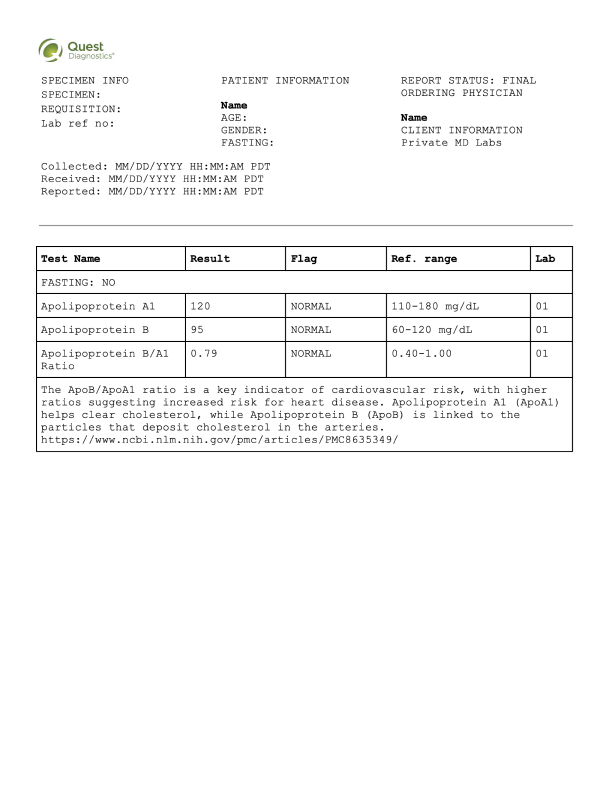
You get clinical lab reports & simplified health insights.
Save time & gas, go straight to the lab. Our doctors cover the rest.
Results start landing the next day after your lab visit.*
We don’t sell or share your data. Your time & privacy matter.
US-licensed doctors have your back if things get unclear.
No hidden fees, nice discounts for regular checkups.
Save a trip to the doctor, go directly to the lab
Instant orders, results often overnight*
Results explained in simple language
Reviewed by US licensed doctors
Fast & confidential, we never sell or share your data
No insurance needed, transparent pricing
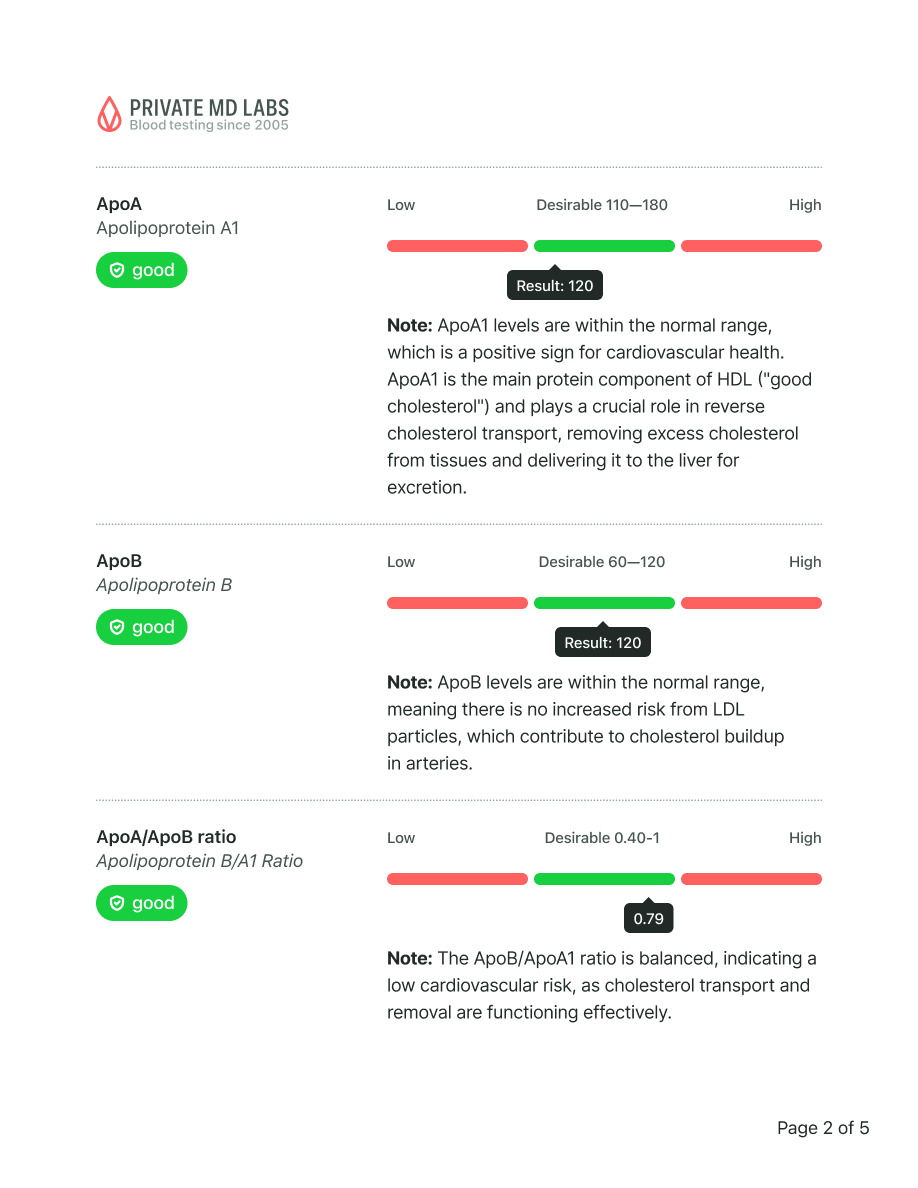
Demo results
Testosterone375 ng/dL
Demo results
NormalOptimal 400 - 1000High
375 ng/dL
What this means
Your testosterone levels are slightly below the optimal range. While this is not necessarily cause for concern, it may contribute to occasional fatigue, reduced motivation, or lower muscle mass over time.
Recommended actions
Increase resistance or strength training
Prioritize 7–8 hours of quality sleep per night, try to reduce stress
Include more zinc- and magnesium-rich foods (like shellfish, beef, pumpkin seeds, spinach)
Consider retesting in 3–6 months
* Regular blood test results (e.g., CBC) typically start arriving the next business day after sample collection. More complex tests, such as hormone panels, may take up to 10–15 business days due to their complexity.
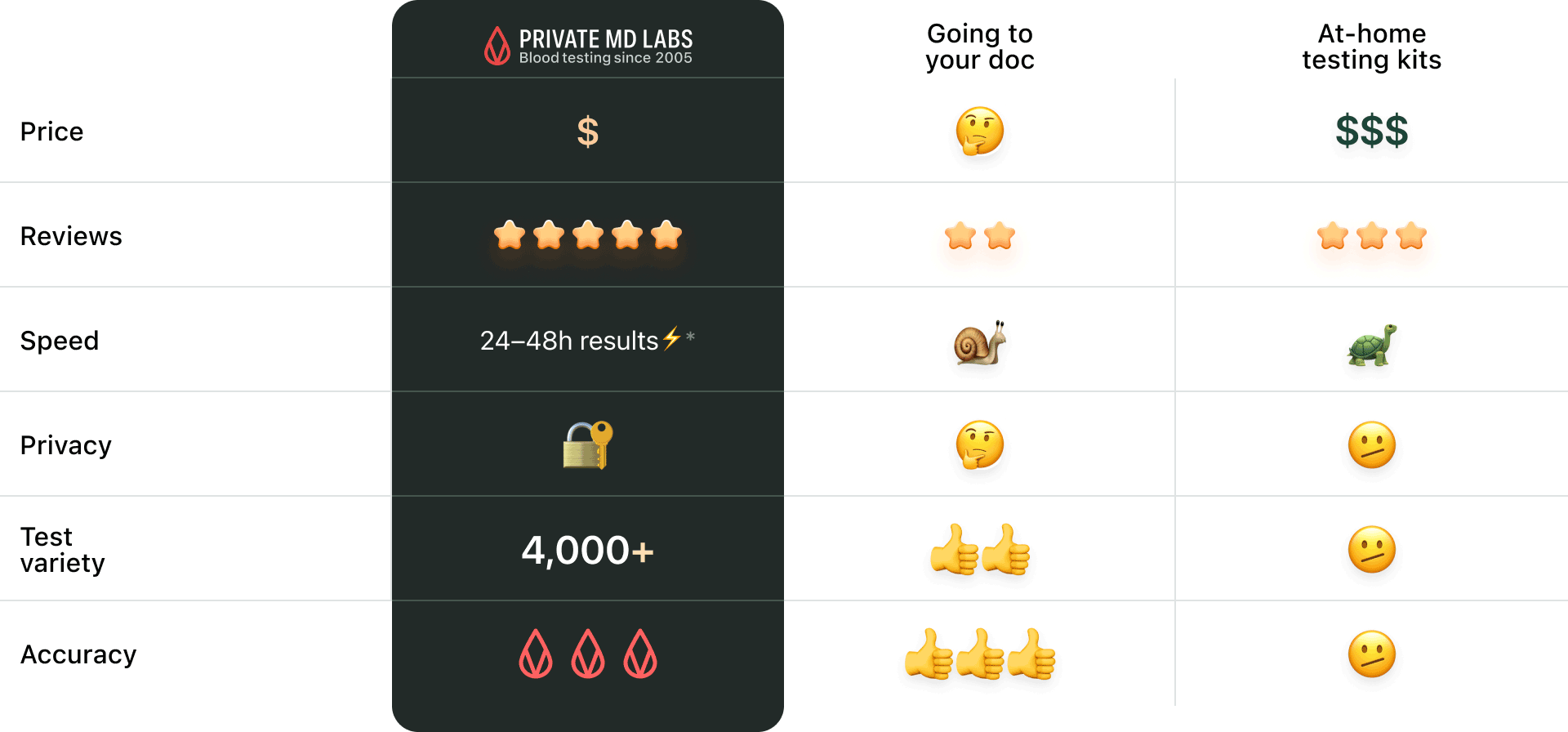
Us vs. Them
Not overhyped or overpriced. Just comprehensive blood testing made simple and for everyone.
* Regular blood test results (e.g., CBC) typically start arriving the next business day after sample collection. More complex tests, such as hormone panels, may take up to 10–15 business days due to their complexity.
1,000,000+ blood tests later, here's what our customers say
Estradiol Ultrasensitive results may get delayed due to high lab volume.It’s a nationwide delay affecting all labs (not just us). Standard processing times apply to all other tests in this panel.
Zinc extended turnaround
Zinc results may get delayed due to high lab volume.It’s a nationwide delay affecting all labs (not just us). Standard processing times apply to all other tests in this panel.
Pregnenolone extended turnaround
Pregnenolone results may get delayed due to high lab volume.It’s a nationwide delay affecting all labs (not just us). Standard processing times apply to all other tests in this panel.
Hi, I'm here to make labs simple, clear, and stress-free. Not sure where to start? That's okay. Tell me what's going on and I'll guide you from there.
I can help you:
choose the right test
prepare for your lab visit
take the next step with confidence and more
Just now
A
Not finding what you need? Text 754-799-7833, we've got you.
We provide helpful guidance, not medical diagnoses. For medical decisions, consult a licensed professional.



 90-day money-back guarantee
 Lab order in minutes
 Save a trip to the doctor
 Low prices since 2005
 Labs within 2 miles